Sleep Environment

Humidifier for Better Sleep

Use humidity for dry-air comfort without creating a microbial, mineral, mold, or burn hazard.

A humidifier may make a dry bedroom more comfortable by reducing dryness in the nose, throat, lips, or skin. It is not a treatment for sleep apnea and does not reliably stop snoring. The EPA recommends keeping indoor relative humidity below 60 percent and ideally between 30 and 50 percent, with careful cleaning to prevent contamination.

Product comparison

Bedroom humidifiers compared

Tank size and runtime matter less than safe output control and whether you will clean the unit consistently. Both picks are cool-mist ultrasonic models; use low-mineral or distilled water when recommended and verify humidity with a separate hygrometer.

Comparison of recommended products
ProductBest forWhy it stands outMain trade-off
DREO HM306 3L Cool Mist Humidifiera compact room and simple controls3-liter tank in a compact formatUltrasonic models can disperse minerals or microbes if misused
Homvana 3.6L Humidifiera slightly larger tankSlightly larger 3.6-liter tankListing variations can change included features
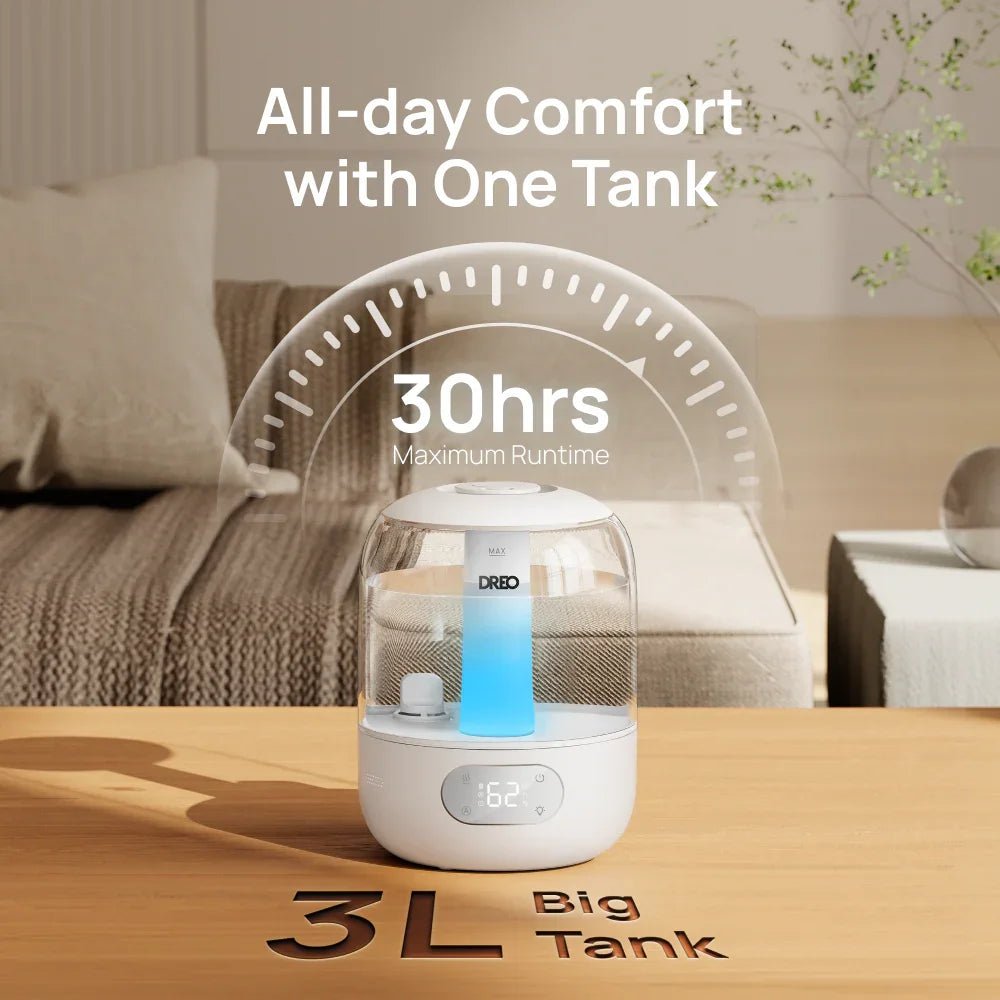
DREO HM306 3L Cool Mist Humidifier
Best for a compact room and simple controls

DREO HM306 3L Cool Mist Humidifier

Dreo describes the HM306 as a 3-liter ultrasonic unit for rooms up to 300 square feet, with sleep mode and up to 30 hours of runtime. Actual runtime changes with output and room conditions.

Pros

  • 3-liter tank in a compact format
  • Sleep mode and touch controls
  • Manufacturer-stated output for rooms up to 300 square feet

Cons

  • Ultrasonic models can disperse minerals or microbes if misused
  • Aroma use adds cleaning considerations
  • Still needs frequent emptying and cleaning
Check current price
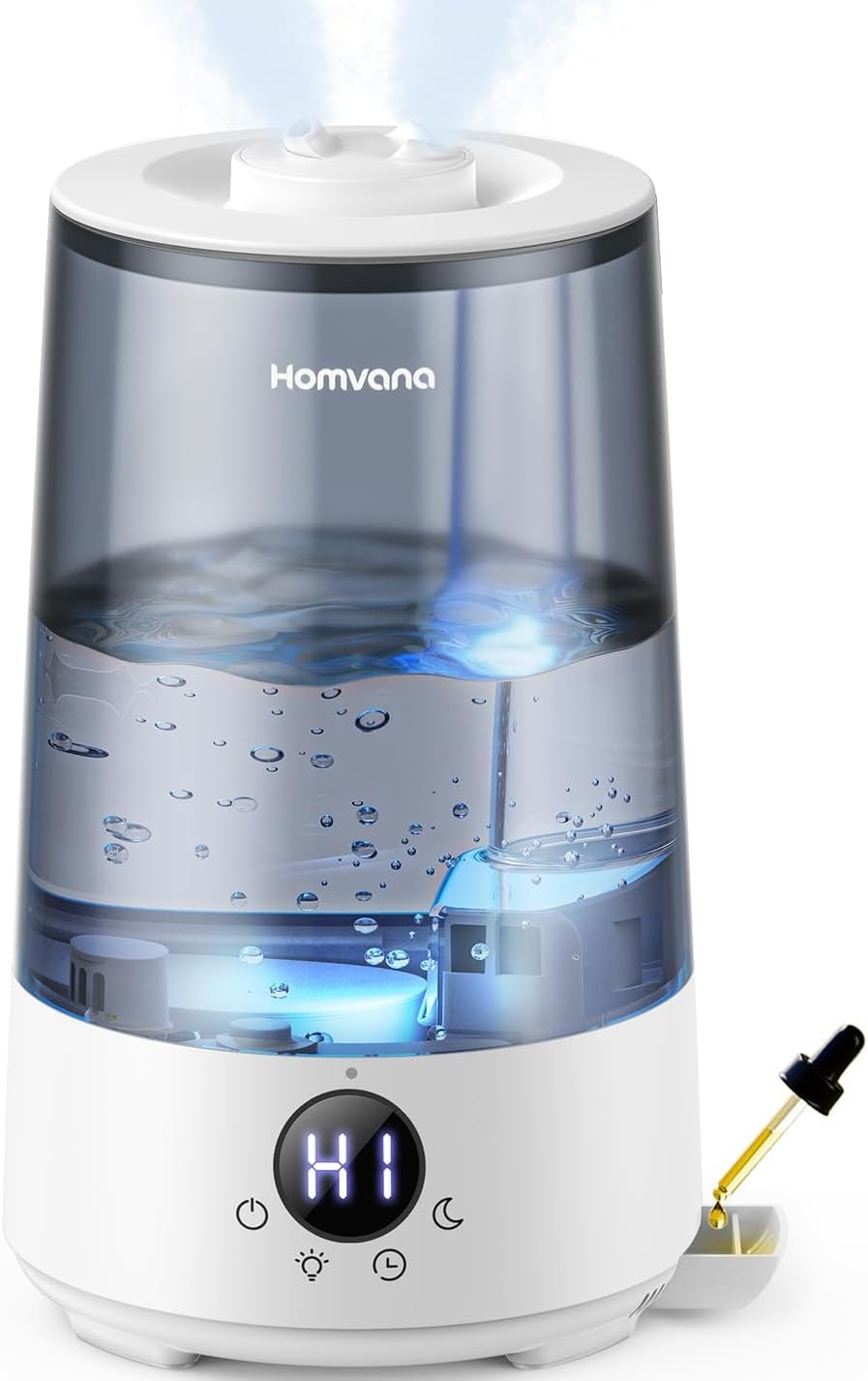
Homvana 3.6L Humidifier
Best for a slightly larger tank

Homvana 3.6L Humidifier

A 3.6-liter cool-mist alternative for shoppers who prioritize tank capacity. Confirm the exact controls, included parts, room-size claim, and cleaning access on the current listing before ordering.

Pros

  • Slightly larger 3.6-liter tank
  • Cool-mist format avoids hot-water steam
  • Bedroom-oriented design

Cons

  • Listing variations can change included features
  • Ultrasonic mist makes water quality important
  • Larger capacity does not reduce cleaning frequency
Check current price

How we compared these products

  • Cool-mist bedroom suitability
  • Tank access and cleaning burden
  • Runtime and room-size claims
  • Noise and control lighting
  • Ability to avoid excessive humidity
  • Verified affiliate listing and product match

We may earn a commission from qualifying purchases. Recommendations are based on stated features and practical fit; prices and availability can change.

When a Humidifier May Help

A humidifier is most rational when a hygrometer confirms dry air and you notice dryness that worsens in that room or season. It may improve comfort, but congestion has many causes and snoring often comes from throat narrowing rather than humidity. Treat benefit as a personal trial, not a guaranteed medical effect.

Measure Humidity First

Place a hygrometer away from the mist stream, windows, and direct heat. EPA guidance says not to exceed 50 percent when using portable humidifiers and to reduce output if moisture condenses on windows, walls, or nearby surfaces. Persistent dampness or musty odor means stop and address the moisture source.

Evaporative, Ultrasonic, and Steam Types

Evaporative units blow air through a wet wick and usually require filter replacement. Ultrasonic and impeller units can be quiet but may disperse tank microbes and minerals into room air. Steam vaporizers heat water and create a serious burn risk, especially around children, so a cool-mist design is generally the more practical bedroom choice.

Water Quality Matters

The EPA recommends water with low mineral content for ultrasonic and impeller units; distilled water can reduce scale and white mineral dust. Demineralization cartridges vary in effectiveness. Do not assume filtered tap water is mineral-free, and follow the product manual if it specifies a water type.

Daily and Every-Third-Day Care

For portable units, EPA advises emptying the tank, wiping surfaces dry, and refilling with clean water daily. Clean the unit every third day, removing scale or film and rinsing away cleaning chemicals. Follow the manufacturer when its instructions are more specific, replace filters as directed, and dry the unit before storage.

Placement and Overnight Use

Set the machine on a stable, water-resistant surface where mist will not soak bedding, walls, electronics, or outlets. Keep cords out of walkways and away from children. Start at the lowest useful output, keep doors or ventilation appropriate for the room, and make sure the unit can be refilled without contaminating the water.

CPAP and Medical Symptoms

People using CPAP should normally use the humidification system and water specified for their equipment rather than trying to direct a room humidifier into the mask. Breathing pauses, gasping, wheezing, persistent congestion, fever, or severe daytime sleepiness require appropriate medical advice; adding moisture cannot diagnose or treat the cause.

Our Bottom Line

Choose the Dreo when a compact 3-liter unit and clearly stated controls fit your room. Consider the Homvana when a somewhat larger tank is the priority, after confirming current listing details. Skip both if humidity is already in range, you see condensation or mold, or daily care is unrealistic.

Frequently Asked Questions

Sources & further reading

These authoritative resources informed the health guidance in this article.

About this guide

About the author

is the independent publisher and editor of SleepSolutions.com. He organizes each guide around authoritative sources, clear safety boundaries, and transparent product disclosures. He is not a physician or sleep specialist, and this guide has not been presented as clinician-reviewed.

Disclaimer: This content is for informational purposes only and is not medical advice. Always consult a qualified healthcare professional for diagnosis and treatment.